
Telecom Room Planning Mistakes That Create Problems Later
Telecom rooms are often planned too late, sized too small, or located in the wrong position. These decisions, made early in a project, can limit infrastructure performance for the building's entire life.
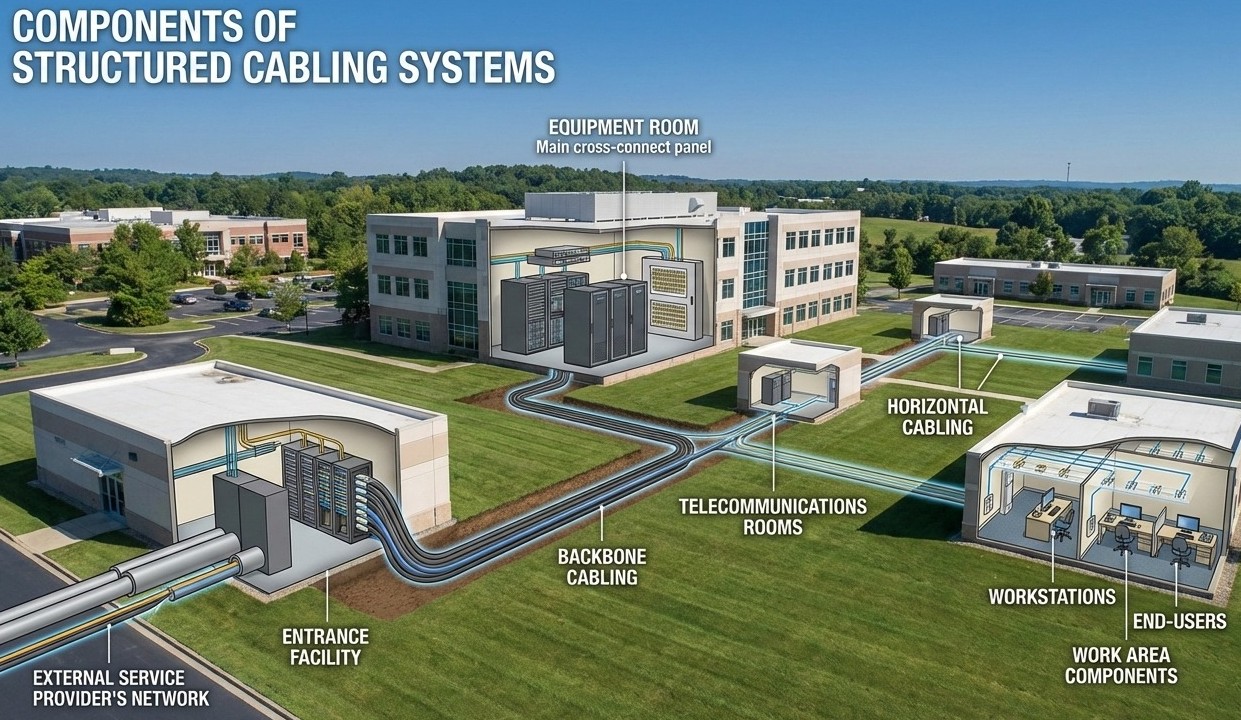
Telecom rooms — also called telecommunications rooms, floor distributors, or network rooms — are the physical spaces that house the active and passive equipment that supports a building's ICT infrastructure. They are among the most important design decisions in any building project, and they are frequently planned too late, sized too small, or located in the wrong position.
Why Telecom Rooms Are Critical
Every floor of a building requires a telecom room to serve as the distribution point for horizontal cabling. The location, size, and design of these rooms directly affects cable run lengths, system performance, installation cost, and long-term flexibility.
The Most Common Mistakes
- Planned too late: When telecom rooms are introduced after the building layout is established, they are often squeezed into whatever space is available — which is rarely the right space.
- Sized too small: Rooms that are too small cannot accommodate the equipment, cable management, and working space required. They become cramped, difficult to maintain, and impossible to expand.
- Wrong location: Telecom rooms should be positioned to minimise cable run lengths and serve the floor area efficiently. Rooms placed at the building perimeter or in inconvenient locations create long cable runs, performance issues, and installation challenges.
- Inadequate environmental controls: Telecom rooms require cooling, power, and access control. Rooms without adequate environmental planning become hot, unreliable, and difficult to manage.
The Design-Stage Opportunity
Telecom room planning decisions made at the design stage are straightforward to get right and very expensive to fix after construction. DTNC works with architects, consulting engineers, and project teams to ensure telecom rooms are planned correctly from the start — in the right location, at the right size, with the right environmental provisions.
About the Author
DTNC — Specialist ICT Infrastructure Consulting & Training
DTNC provides specialist consulting, project advisory, and practical training for ICT infrastructure professionals. Our insights are drawn from real-world experience across structured cabling, fibre networks, WiFi, CCTV, access control, and smart building environments.

Ready to discuss your project?
DTNC provides specialist consulting, project advisory, and practical training for ICT infrastructure professionals.